


Impurity Isolation vs Chemical Synthesis: Which Strategy Truly Wins?
Pharmaceutical impurities are unavoidable in the drug manufacturing process. They are also known as API impurities. The impurities originate during the synthesis, storage, or formulation of the drug. According to ICH, any chemical component apart from the desired API is considered an impurity.
Table of Contents
- Introduction to Pharmaceutical Impurities
- What is Impurity Isolation?
- What is Chemical Synthesis of Impurities?
- Key Differences (Pointwise Comparison)
- Real-Life Examples from Industry
- Regulatory Perspective (ICH Guidelines)
- Critical Evaluation: Which Approach is Better?
- Future Trends in Impurity Profiling
- Conclusion
Introduction to Pharmaceutical Impurities
The pharmaceutical impurities directly impact safety, efficacy, and regulatory approval of the drug. Even trace levels can alter pharmacological behavior. For instance, the nitrosamine impurities of the oncology drugs could be highly mutagenic and carcinogenic.
For example, following are the nitrosamine impurities found in various drugs:
- N-nitrosodimethylamine (NDMA),
- N-nitrosodiethylamine (NDEA),
- N-nitroso-N-methyl-4-aminobutyric acid (NMBA)
- N-nitroso-desmethyl-azithromycin
Therefore, identification, isolation, and characterization of impurities are mandatory to ensure the safety and efficacy of the drug.
2. What is Impurity Isolation?
Definition
Impurity isolation involves separation of impurities from the drug substance or drug product using physical or chromatographic techniques.
The impurities could be solids or liquids. The volatile liquid impurities are easy to remove. Whereas solid impurities are comparatively difficult to remove.
Commonly Used Techniques
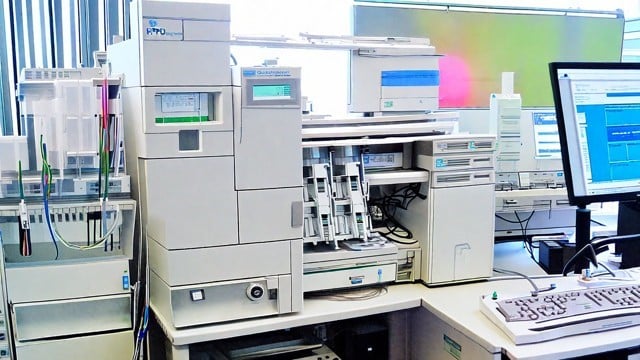
- Preparative HPLC
- Column chromatography
- Crystallization
- Distillation
The liquid impurities, such as solvents, can be separated by the distillation process. And the solid impurities can be separated by column chromatography of crystallization. The distillation and crystallization methods are old. These techniques are useful when there is a large amount of impurities present in the material. If the impurities are present in very, very low concentrations, then these techniques are not effective. Therefore, to overcome these problems, the advanced chromatographic techniques are used effectively.
Key Features of Impurity Isolation Methods
- Works on real process impurities
- Provides actual impurity samples
- Often low yield and time-consuming
Example
During stability studies of an API, a degradation impurity forms at 0.2%. Researchers isolate it using preparative HPLC and characterize it using NMR and MS.
Strengths of Impurity Isolation Methods
- Represents real-world impurity profile
- No need for structural prediction initially
- Essential for unknown impurities
Limitations of Impurity Isolation Methods
- Difficult for trace-level impurities
- Requires large sample quantities
- Expensive and time-intensive
Modern analytical tools, such as HPLC and LC-MS, sometimes bypass isolation strategies entirely by directly identifying impurities.
3. What is Chemical Synthesis of Impurities?
Definition
Chemical synthesis involves the deliberate preparation of the impurities based on predicted or known structures. The chemists often study the API synthesis route to understand the source of the impurities. This aids in developing a new strategy for synthesizing impurities.
Approach
- Predict impurity structure using LC-MS/NMR
- Design synthetic route
- Prepare impurity in gram scale
Example
An unknown impurity detected in LC-MS is proposed as an oxidized derivative. Thus, chemists synthesize it via controlled oxidation and confirm its identity.
Strengths
- Produces sufficient quantity for studies
- Enables toxicological evaluation
- Provides high-purity reference standards
Synthesized impurities often show better spectral clarity compared to isolated ones.
Limitations
- Requires accurate structural prediction
- Multi-step synthesis can be complex
Chemical synthesis is not feasible for unknown impurities initially. Once the complete structural analysis is done, then it is possible to design and synthesize the impurity product.
4. Key Differences: Isolation vs Synthesis
Below are some significant differences that compare impurity isolation and chemical synthesis.
| Parameter | Impurity Isolation | Chemical Synthesis |
| Source | Real process/degradation impurity | Predicted impurity |
| Quantity | Low | High |
| Time | Slow | Moderate to fast |
| Cost | High | Variable |
| Structural certainty | High (actual impurity) | Depends on prediction |
| Use | Identification | Standard preparation & validation |
5. Real-Life Examples from Industry
Example 1 – Process Impurity in API
During the multi-step synthesis of the API, the unreacted intermediates may remain in the final product. These are isolated and studied to optimize reaction conditions.
👉 Insight: Isolation helps improve process chemistry.
For example, a Linagliptin API sample may consist of Linagliptin (S)-isomer and Linagliptin regioisomer impurities.

Example 2 – Nitrosamine Impurity
A nitroso impurity of Ciprofloxacin is detected at the ppm level. Therefore, isolation of N-Nitroso Ciprofloxacin is impractical. Thus, it is chemically synthesized and evaluated for toxicity.

👉 Insight: Synthesis is essential for risk assessment.
Example 3 – Stability Degradation Product
Furosemide API degrades under UV light exposure and forms hydrolysis products. Thus, impurity is first isolated, then synthesized to confirm structure and create a reference standard.
👉 Insight: Hybrid approach is often optimal.
6. Regulatory Perspective (ICH Guidelines)
Regulatory agencies emphasize impurity identification and qualification.
- Impurities >0.1% must be identified and characterized (Link)
- Structural confirmation is essential
- Reference standards are required for quantification
Thus, synthesis becomes critical after identification.
Moreover, impurity profiling is central to drug approval and quality control. (ScienceDirect)
7. Critical Evaluation: Which Approach is Better?
It is important to understand the type of impurity, its percentage relative to API and the purpose of the identification. The analysis can provide an idea about whether to synthesize or isolate the impurities.
When Isolation is Better
- Unknown impurities
- Early-stage drug development
- Degradation studies
When Synthesis is Better
- Known impurity structures
- Regulatory submission
- Toxicological studies
Key Insight
Neither approach is universally superior. Instead, they complement each other.
Isolation answers:
👉 “What impurity is present?”
Synthesis answers:
👉 “Can we confirm and quantify it reliably?”
8. Future Trends in Impurity Profiling
Since the new drug development is a continuous process, there is a need for the impurity profiling of the developed drugs. Therefore, the impurity synthesis or isolation field is evolving rapidly.
Emerging Trends
- AI-driven impurity prediction
- LC-MS/MS and hyphenated techniques
- In-silico toxicity assessment
- Green chemistry approaches for synthesis
Moreover, real-time impurity monitoring is gaining importance in continuous manufacturing.
9. Conclusion
Impurity isolation and chemical synthesis are complementary.
Isolation of the impurities provides authenticity. The synthesis of possible impurities enables scalability.
However, relying solely on isolation limits progress. Conversely, relying solely on synthesis risks incorrect assumptions.
The following flowchart explains clearly how to choose the best possible way to deal with the pharmaceutical impurities.

Thus, the most effective strategy is a hybrid workflow:
- Detect impurity
- Isolate and characterize
- Synthesize for confirmation and studies
This integrated approach ensures regulatory compliance, scientific accuracy, and industrial feasibility.
References
- Kumar et al., Synthesis, isolation and characterization of impurities
https://pmc.ncbi.nlm.nih.gov/articles/PMC5790752/ - Görög S., Impurity profiling in pharmaceuticals
https://www.sciencedirect.com/science/article/pii/S0165993617303230 - IJPRA Review on Pharmaceutical Impurities
https://ijprajournal.com/issue_dcp/Pharmaceutical%20impurities%20%20A%20review%20of%20their%20importance%20in%20drug%20safety%20and%20efficacy.pdf - A Review on Multi Approaches for Impurity Isolation and its Characterization
https://www.researchgate.net/publication/383936330
| Pharmaceutical impurity solutions offered by SynThink Research Chemicals |
| We provide pharmaceutical impurity standards to support your method development and drug development projects. We are specialized in the synthesis of pharmacopeial and non-pharmacopeial API impurities. In addition to this, we also have capabilities for custom synthesis of API intermediates and building blocks that are required in the drug development process. In addition to this, we provide the services for the synthesis of small molecules ranging from milligram to gram scale. We deliver each product along with validated analytical data and a Certificate of Analysis. At Synthink we rigorously test the products at regular intervals to confirm their identity and quality. We have expertise in a wide range of products that are categorized as Impurities, Building Blocks, Intermediates, and Nitrosamines. Specifically, we provide various process-related and degradation impurities of sodium-glucose co-transporter 2 (SGLT2) inhibitors like Dapagliflozin, Empagliflozin and Canagliflozin. We are experts in the manufacturing of impurities of cholesterol-lowering drugs such as Atorvastatin, Rosuvastatin andEzetimibe. Also, we offer impurities of the corticosteroid class of APIs, for example, Prednisone, Methylprednisolone, Dexamethasone, and Hydrocortisone. |