


ICH Q3A vs Q3B: API and Drug Product Impurity Guidelines Explained
In the pharmaceutical industry, clear impurity control is essential for the efficacy of the medicines and regulatory compliance. This comprehensive guide explains how industry professionals can benefit from the ICH Q3A and Q3B guidelines for API and drug product impurities.
Keywords: ICH Q3A, ICH Q3B, impurities in drug substances, impurities in drug products, impurity qualification thresholds, API impurities, degradation products, regulatory guidance, ICH Q3C, ICH Q3D.
Table of contents
- Introduction
- What are ICH Q3A and Q3B?
- Why do the two guidelines exist?
- Key similarities
- Key differences
- Practical steps for implementation
- Reporting, identification and qualification thresholds
- Relationship with other ICH Q3 guidelines (Q3C, Q3D, Q3E)
- Common difficulties in regulatory compliance
- References
Introduction
Impurity control is the fundamental aspect for drug quality. In this context, ICH Q3A and Q3B guidelines set global expectations. These guidelines are necessary for the regulatory submissions and inspections
What are ICH Q3A and Q3B guidelines?
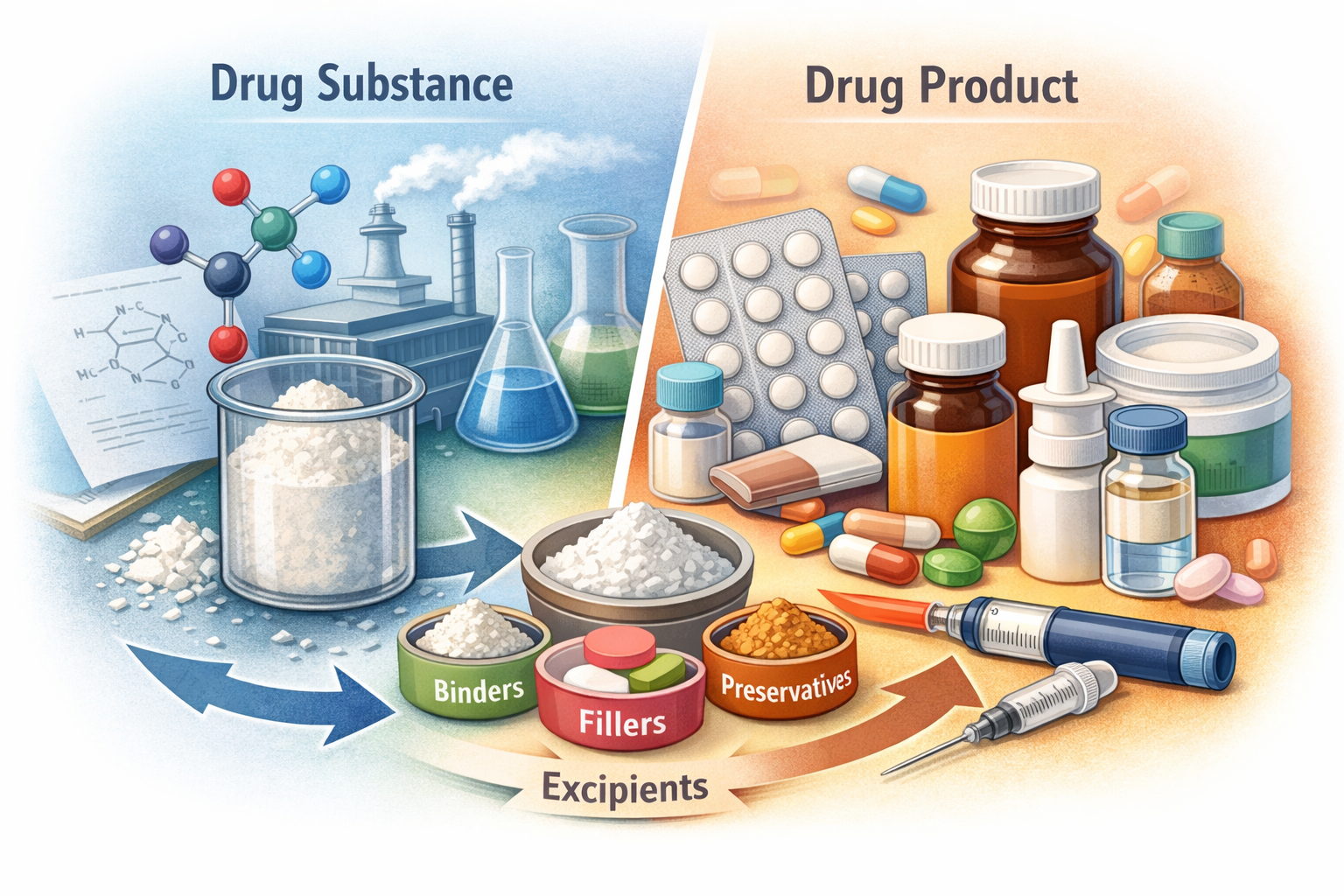
- ICH Q3A (R2): Provides guidance on impurities in new drug substances (APIs). It covers organic, inorganic, and residual solvents related to the API. (ICH Database)
- ICH Q3B (R2): Provides guidance on impurities in new drug products (finished dosage forms). It focuses on degradation products and reaction products of APIs and excipients. (ICH Database)
Why do the two guidelines exist?
The necessity of the two separate guidelines is due to the following reasons:
- API impurities differ from product degradation products.
- The API impurities arise from synthesis, reagents, and intermediates.
- Product impurities arise from formulation interactions and stability.
- Due to this reason, separate guidelines give targeted control strategies.
Key similarities
Although the ICH Q3A and Q3B are mentioned separately, they have the following similarity as well:
- ICH Q3A and Q3B are risk-based.
- They require identification, quantification, and qualification of impurities.
- Both rely on validated analytical methods (ICH Q2 principles). (U.S. Food and Drug Administration)
- These guidelines set reporting, identification, and qualification thresholds that are tied to dose and safety.
Key differences
The key differences of ICH Q3A and Q3B are mentioned below:
| Parameter | ICH Q3A | ICH Q3B |
| Scope | Covers impurities present in the API as manufactured | Covers impurities appearing in the finished product (including degradation products) |
| Origin of impurities | Synthetic route, reagents, catalysts, by-products, residual solvents | Degradation during storage, interactions with excipients, or microbiological or packaging-related sources. |
| Analytical approach | Emphasis on batch-to-batch control and process impurities. | Emphasis on stability studies and forced degradation to identify likely degradation products |
| Regulatory expectations | Limits and qualifications are tied to the API maximum daily dose and impurity toxicity. | Requires justification for which degradation products must be qualified and controlled, often evaluated case-by-case |
Practical steps for implementation
The workflow for the implementation is given below:
- Record the API synthetic route and list all possible by-products.
- Run forced degradation on the drug product and identify degradation products.
- Validate analytical methods per ICH Q2. Ensure LOD/LOQ meet thresholds.
- Compare impurity levels to reporting/identification/qualification thresholds. Use dose-based thresholds.
- Create a control strategy: specification, control tests, and stability acceptance criteria.
- Document safety justification or toxicology bridging data when qualification is required.
Reporting, identification and qualification thresholds
- Thresholds depend on the maximum daily dose (MDD).
- Typical Q3A thresholds (examples from ICH):
- Reporting threshold: impurities ≥ 0.05% (varies with MDD).
- Identification/qualification thresholds: higher and dose-dependent; see ICH tables for exact breaks.
Q3B thresholds for degradation products are similarly dose-dependent and use case examples in guidance attachments.
Relationship with other ICH Q3 guidelines
- Q3C (Residual Solvents): Controls solvents left from API manufacture. Apply with Q3A controls.
- Q3D (Elemental Impurities): Risk-based control of metals in products and APIs. Integrate into impurity risk assessment.
- Q3E (Extractables & Leachables): Relevant when packaging or components introduce impurities in the finished product. Use alongside Q3B.
Common difficulties in regulatory compliance
- Treating API and product impurities the same.
- Fix: Use Q3A for API and Q3B for product-level degradation.
- Incomplete forced degradation studies.
- Fix: Run oxidative, photolytic, hydrolytic, thermal, and humidity stresses. Document methods and mass balance.
- Weak analytical sensitivity.
- Fix: Validate methods to reach required LOD (Limit of Detection)/LOQ (Limit of Quantification) that meet reporting thresholds.
- Ignoring elemental and solvent risks.
- Fix: Add Q3C and Q3D assessments to the impurity risk register.
Quick checklist for regulatory submissions
- Include impurity profiles for API and product.
- Provide validation for analytical methods (ICH Q2).
- Show forced degradation data (for Q3B).
- Justify impurities above thresholds with toxicology or qualification studies.
References
- ICH Q3A (R2)—Impurities in New Drug Substances (PDF). (ICH Database)
- ICH Q3B (R2)—Impurities in New Drug Products (PDF). (ICH Database)
- FDA: Q3B(R)- Guidance for Industry: Impurities in New Drug Products (Revision 3). (U.S. Food and Drug Administration)
- EMA: ICH Q3A/Q3B pages—regulatory summaries and links. (European Medicines Agency (EMA))
- ICH Q3D – Elemental Impurities (for metal risk assessments). (ICH Database)
| Pharmaceutical impurity solutions offered by SynThink Research Chemicals |
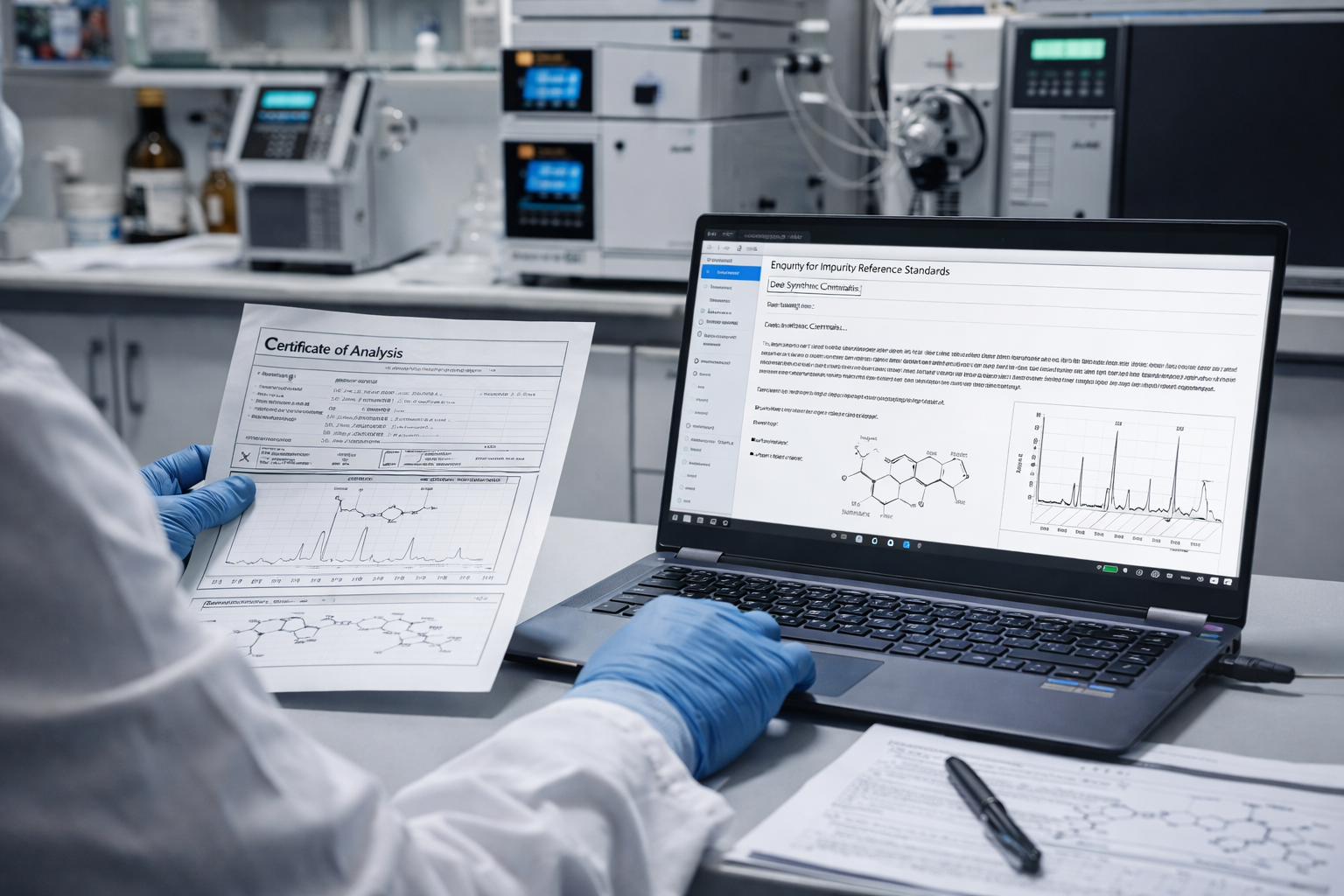
| We provide pharmaceutical impurity standards to support your method development and drug development projects. We are specialized in the synthesis of pharmacopeial and non-pharmacopeial API impurities. In addition to this, we also have capabilities for custom synthesis of API intermediates and building blocks that are required in the drug development process. We provide the services for the synthesis of small molecules ranging from milligram to gram scale. We deliver each product along with validated analytical data and a Certificate of Analysis. At Synthink we rigorously test the products at regular intervals to confirm their identity and quality. We have expertise in a wide range of products that are categorized as Impurities, Building Blocks, Intermediates, and Nitrosamines. Specifically, we provide various process-related and degradation impurities of sodium-glucose co-transporter 2 (SGLT2) inhibitors like Dapagliflozin, Empagliflozin and Canagliflozin. We are experts in the manufacturing of impurities of cholesterol-lowering drugs such as Atorvastatin, Rosuvastatin and Ezetimibe. Also, we offer impurities of the corticosteroid class of APIs, for example, Prednisone, Methylprednisolone, Dexamethasone, and Hydrocortisone. |